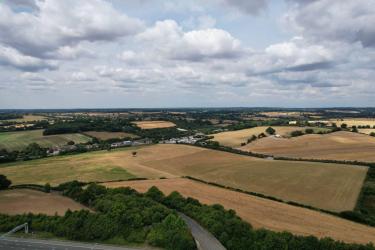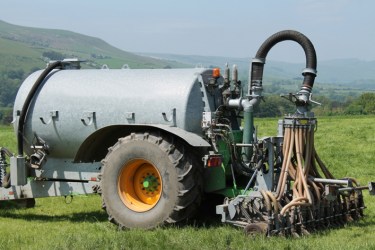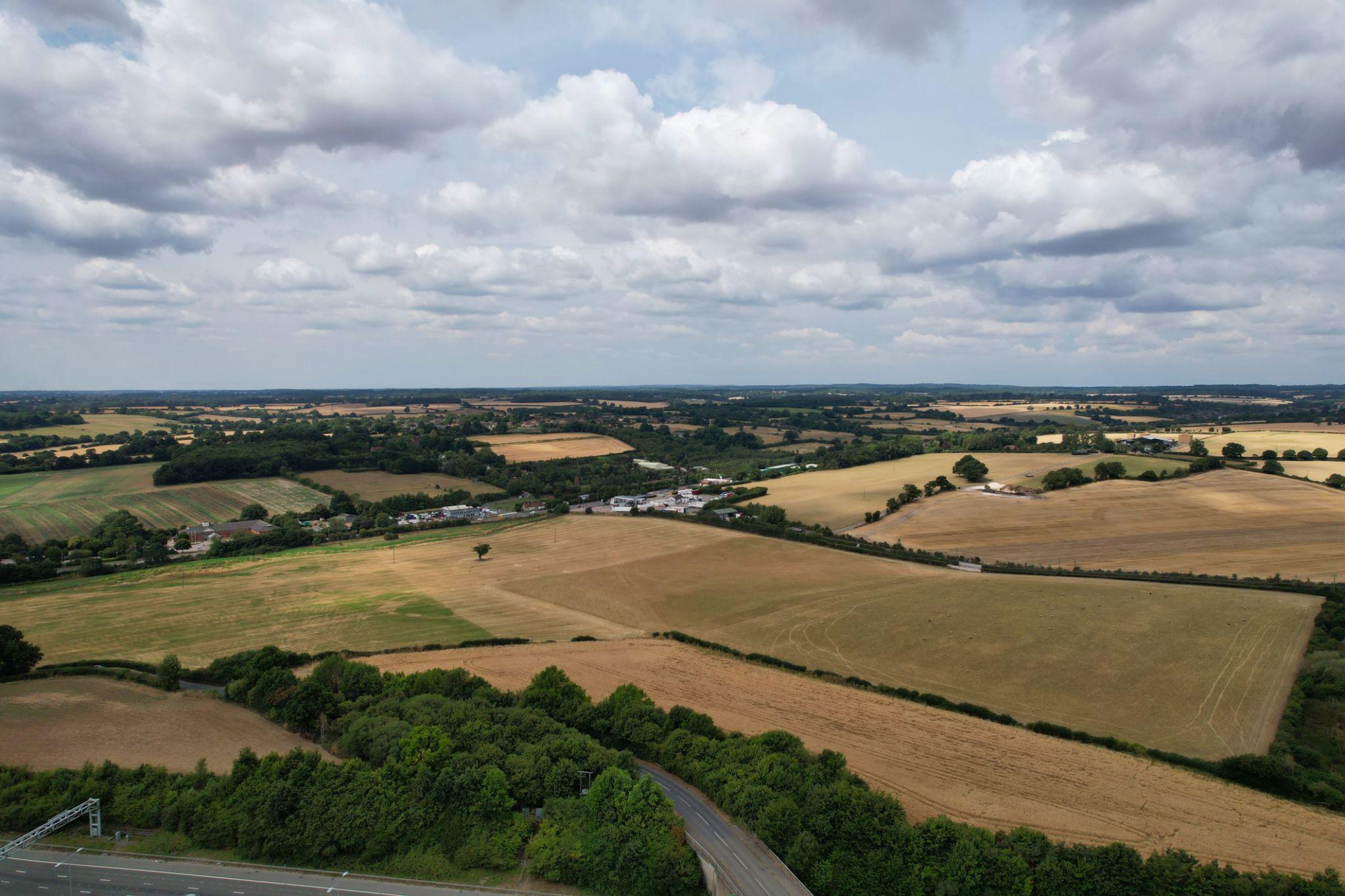
England’s Land Use Framework has now been published and sets out a clear and necessary vision for how land should function in the future. It promotes a move toward multifunctional land use, where the same land delivers food production, nature recovery, water management, and clean energy.
This is a practical and well-grounded direction, reflecting the need to get more value from a finite resource without forcing trade-offs between competing demands. It brings together long discussed ideas into a more coherent framework that starts to feel actionable.
A shift in how land is used
The framework points to an increase in domestic food production, alongside growth in clean energy and a significant expansion of land managed for nature and climate outcomes. At the same time, it signals a reduction in intensive arable use in more environmentally sensitive areas.
This is less about reducing output and more about reshaping where and how production happens, with greater emphasis on horticulture, agroforestry, timber, and diversified income streams linked to environmental delivery. For many farm businesses, this will mean gradual adaptation rather than wholesale change, but the direction is clear.
The importance of long-term policy clarity
A particularly important signal is the commitment to continuity in environmental land management schemes. The framework makes it clear that these schemes will remain and that farmers will have greater long-term clarity ahead of 2030.
That stability is essential if land managers are to invest with confidence in new systems, partnerships, and infrastructure. Without it, even well-intentioned policy struggles to translate into action on the ground.
The framework reinforces the idea that land use should reflect the natural strengths of different regions. Some areas are better suited to peatland restoration, others to woodland creation, agroforestry, or low input grassland systems.
This place-based approach is both logical and necessary, creating a more realistic pathway for delivering environmental outcomes at scale while maintaining productive land use. It also gives supply chains a clearer signal about where and how to focus their engagement.
Water and data as key constraints
Water quality stands out as a central constraint shaping the system. Expectations around nutrient management, runoff reduction, and flood mitigation will increasingly determine what is viable, influencing both farming and development.
Alongside this, a more data-led planning system will guide land use decisions, shifting value toward sites that align with environmental priorities and carry lower risk. Over time, this is likely to reshape both land values and investment decisions.
Challenges within the framework
There are, however, clear challenges. The framework assumes that food production, clean energy, and nature recovery can all increase together, but in practice there will be limits driven by soil, water, and nutrient capacity.
Funding pathways also remain uncertain, which may slow adoption, particularly for those without the capital or capability to adapt quickly. There is also a risk that larger or more sophisticated operators are better positioned to capture value from this transition, potentially widening existing gaps.
What this means in practice
Despite this, the document reads as a common-sense articulation of where land use policy needs to go. It provides a useful structure for companies looking to align supply chains with Science-Based Targets for Nature.
For example, a beef supply chain in the South West can align with the framework’s ambitions for that area around grassland restoration and protected watercourses, improving grazing resilience, reducing nutrient loss, and enhancing water outcomes. In doing so, it can reduce its own exposure to climate and regulatory risk while supporting farmers through transition.
From policy to delivery
More broadly, supply chains that take a regional and outcome-led approach can begin to align procurement, investment, and environmental goals in a more coherent way. By working with farmers in areas best suited to particular interventions, and by linking those actions to both public schemes and private finance, there is a real opportunity to move toward more effective blended or stacked funding models.
This is where the framework has the potential to move from policy into something genuinely transformative.
Next steps
With over 30 years’ experience working directly with farmers, as well as on behalf of food companies and water companies, it is refreshing to see climate, biodiversity, and water quality being addressed together in practical and forward-thinking language.
The opportunity now is to turn that alignment into delivery. If you are looking to align your farm or supply chain strategy across these areas, speak to us today on 01270 616800.
About The Author

 07976 238 490
 george.peart@genusplc.com